
Helping Build Self Awareness at School and at Home
By Charlotte Wilson, Mental Health and Wellbeing Leader
One of the greatest gifts we can give children isn’t the ability to protect them from every challenge, uncomfortable feeling or difficult situation.
Those moments are an inevitable, and often important, part of life.
Instead, the gift is helping them understand what is happening inside them so they can recognise their own signals, respond with helpful strategies, and gradually develop the confidence to navigate life’s challenges.
Over the past year, our staff have been fortunate to continue our professional learning in this area with Occupational Therapist Rachel Schlipalius, who has worked alongside our team on several occasions to deepen our understanding of self regulation, sensory needs and executive functioning. Last week, Rachel spent two hours with each year level team, supporting our ongoing work to strengthen a consistent, whole school approach to self regulation.
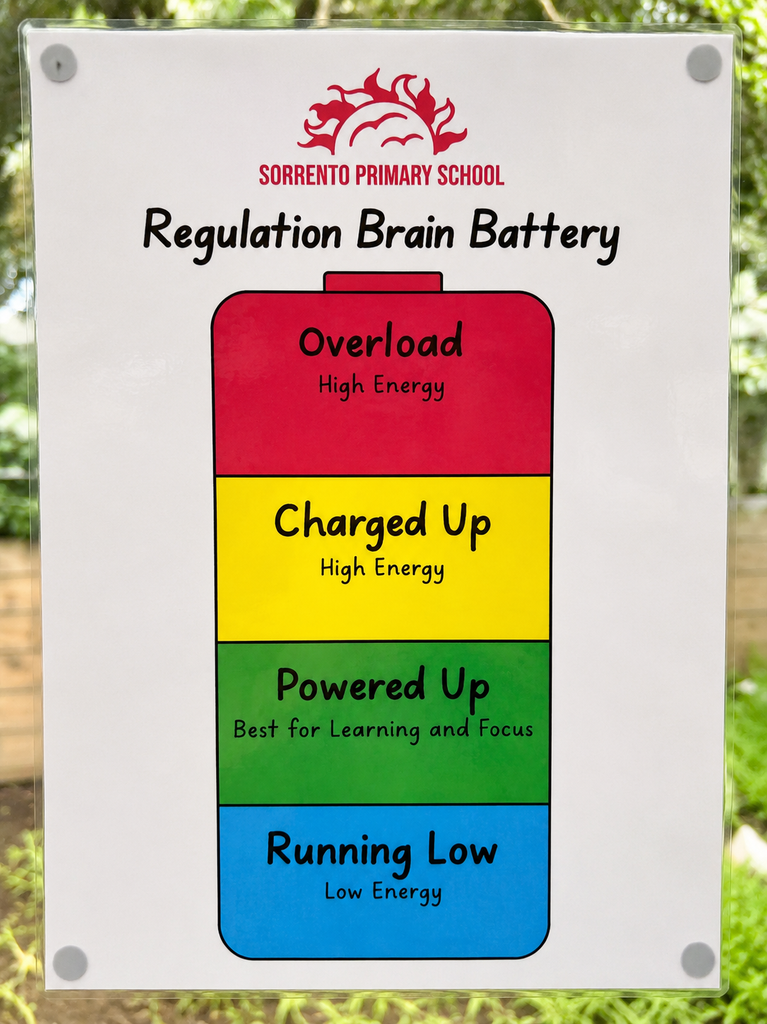
Over the coming weeks, you may hear your child talking about their Regulation Speedo or Brain Battery. Through classroom lessons, small group sessions and everyday conversations, we are introducing a shared language that helps students better understand what is happening inside them, recognise what those signals might be telling them, and discover strategies that help them respond to what they need.
None of us wake up feeling exactly the same every day. Some days we feel refreshed and ready to learn. Other days we feel flat, tired, restless, frustrated or overwhelmed. Sometimes we know exactly why. Sometimes there are many contributing factors. And sometimes there isn’t one obvious reason at all.
Learning to notice those changes is the first step towards understanding ourselves, and responding to what we need.
The goal is not to keep children in the “green zone” all day.
That simply is not realistic.
All of us, children and adults alike, move between different states of regulation throughout the day.
Our goal is to help children become increasingly aware of what is happening inside them, recognise the early signs that they are moving away from their optimal learning state, and gradually build a personalised toolbox of strategies that helps them respond. These are lifelong skills that support not only learning, but friendships, resilience, decision making and overall wellbeing.
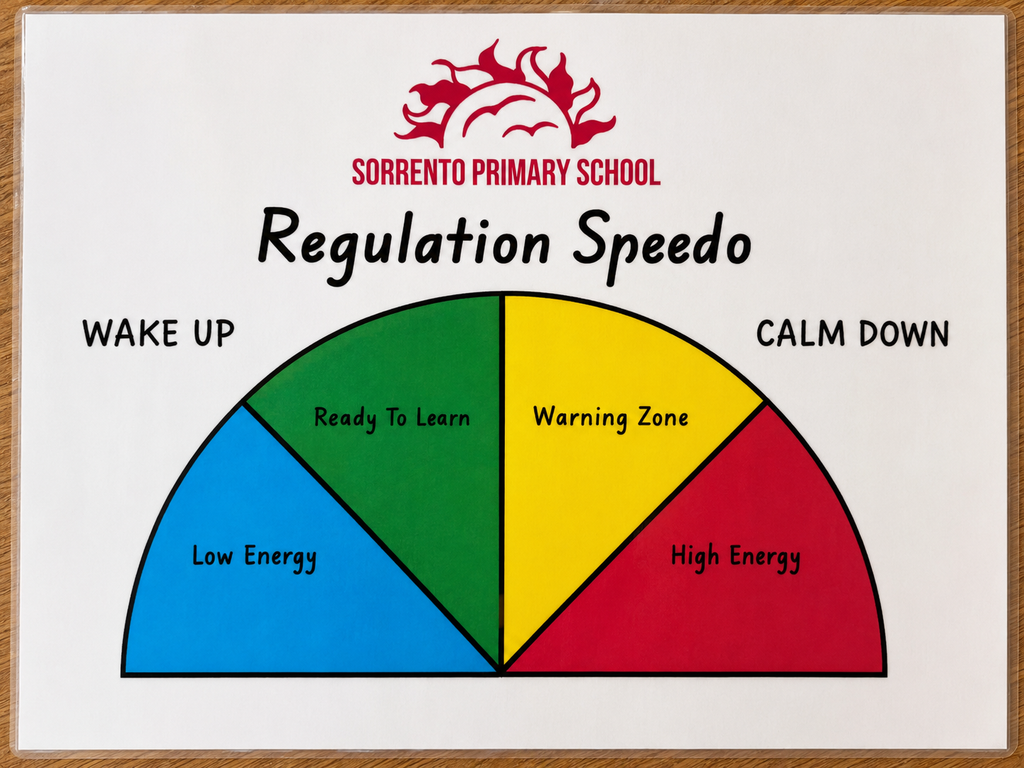
At Sorrento Primary School, we use slightly different visuals for our younger students in Foundation to Year 2 and our older students in Years 3 to 6, but the underlying concepts are exactly the same. The language and visuals are simply adapted to match each age group’s developmental understanding while continuing to build the same lifelong skills of self awareness and self management.
One of the most important ideas we are teaching students is that our bodies usually notice before our brains do.
Before we become overwhelmed, our body often gives us clues. Our breathing might change. Our muscles might become tense. We may start talking faster, become restless, lose concentration, withdraw from others, or find ourselves reacting more quickly than usual. For another child, those warning signs may look completely different.
Learning to notice these early body signals is one of the foundations of self regulation because it gives children the opportunity to respond while they still have access to their thinking brain.
We often refer to this as the Warning Zone, the yellow section on all of our school regulation visuals.
One of the most important things we are teaching students is that yellow is not a bad place to be.
In fact, sometimes it is exactly where we want to be.
Imagine you are about to run in the school athletics carnival, perform at assembly, play in a grand final, walk onto a stage, or head to an exciting birthday party. Your heart might beat a little faster. You might feel butterflies in your tummy. Your body might feel full of energy and anticipation.
That is your body preparing you for something important.
A little activation can actually help us perform, concentrate and enjoy exciting experiences.
The key is not avoiding the yellow zone.
The key is noticing when we are moving into yellow, understanding why we are there, and recognising when that level of activation is helping us, or when it is beginning to tip towards the red zone, where we become overwhelmed.
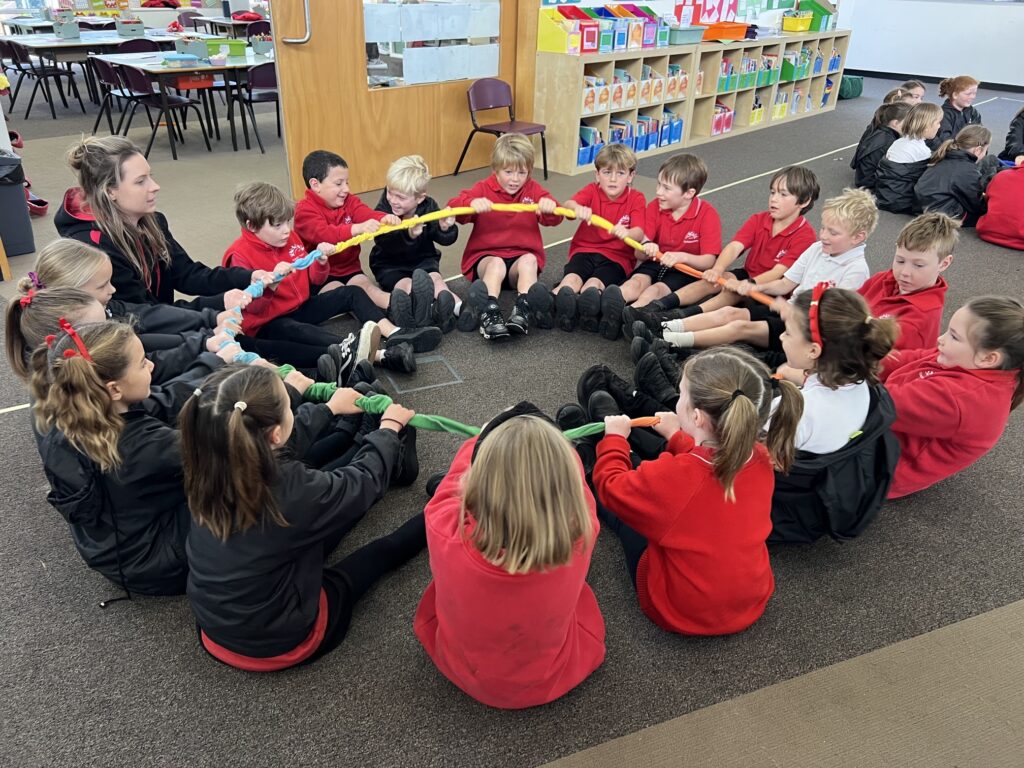
Different situations call for different levels of energy. The goal is not to feel one way all day. The goal is to recognise what we need in each moment.
When children do become overwhelmed, it is important to remember that their thinking brain becomes much less available. Problem solving, listening, reasoning, learning and making thoughtful decisions all become significantly harder.
In those moments, children rarely need more instructions.
They need calm, responsive adults.
They need connection.
They need co regulation.
As children grow, our hope is that this co regulation gradually becomes self regulation. Every conversation, every check in and every opportunity to notice their own signals is helping build that lifelong skill.
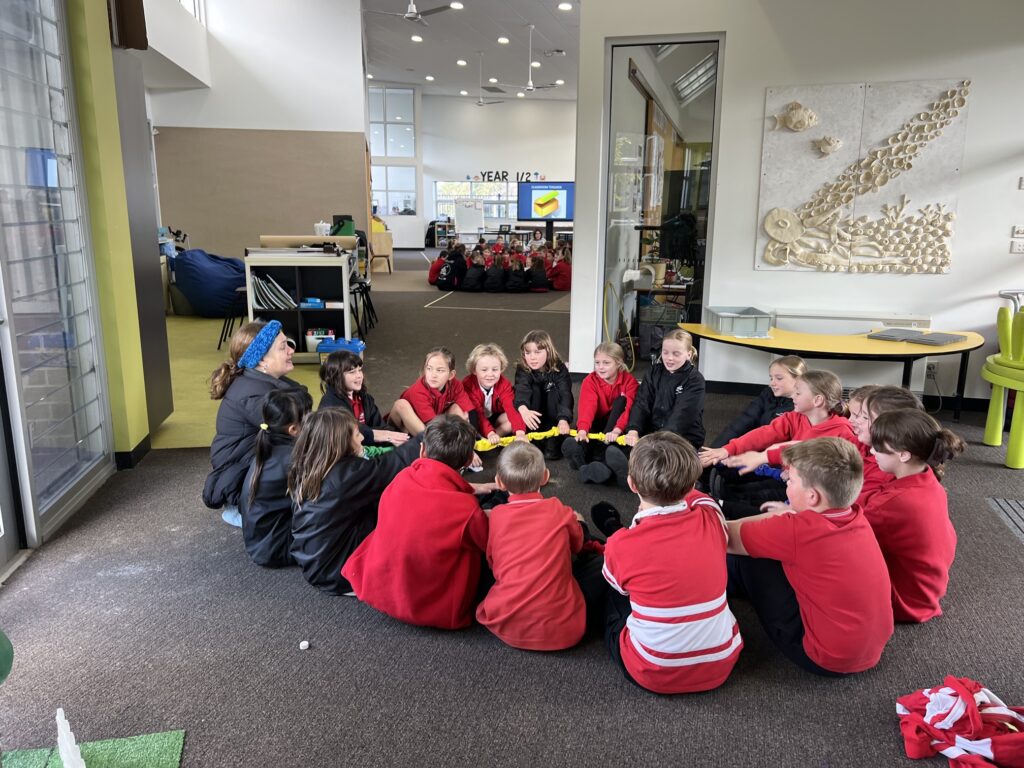
Alongside building awareness, we are helping students discover the strategies that work best for them. Every child’s regulation toolbox looks different. For one child it might be a walk. For another, a push up, deep breathing, drawing, stretching, listening to music, reading quietly, wearing headphones or talking to someone they trust.
Part of growing up is discovering what helps you return to balance.
You can support this learning at home by using the same language.
Rather than asking,
“What’s wrong?”
or,
“Get out of that mood!”
you might instead ask,
“Where do you think your Brain Battery is right now?”
“What zone do you think you’re in?”
“How do you know?”
“What is your body trying to tell you?”
“What clues is your body giving you?”
“What do you think might help right now?”
These simple questions shift children away from feeling judged and towards becoming curious about themselves. Over time, that curiosity becomes the first step towards self regulation.
Perhaps the most important message we want every child to take away is this.
There is nothing wrong with finding ourselves in the blue or yellow zones. They are a normal part of being human.
Sometimes we still find ourselves in the red zone. When that happens, it is not something to feel ashamed of. It is simply a signal that we have become overwhelmed and need support.
The goal is not to stay in the green zone all day.
The goal is to notice our warning signs early enough that we can respond before we become overwhelmed whenever possible.
And when we do find ourselves in the red zone, we recover, repair, reflect and learn.
One of the messages I have been sharing with our students is that adults do not always notice our own warning signs either.
Some of your senior students may have already come home talking about my rather infamous Blueberry Story! Our sweet and supportive students usually have a laugh when I tell it, but there is a very real lesson behind it.
I shared a time when I completely missed my own warning signs. Looking back, my body had been giving me clues all along. I was tired, stretched and overwhelmed, but I did not recognise them until I found myself reacting in a way I was not proud of.
What I wanted students to see is that adults are still learning too.
Sometimes we notice our warning signs early.
Sometimes we miss them.
Sometimes we only recognise them in hindsight.
Sometimes we become overwhelmed.
What matters is not that we get it right every time.
What matters is that we notice, repair where we need to, reflect on what happened, and think about what we might recognise a little earlier next time.
That is how self awareness grows.
That is how self regulation grows.
This week, invite more conversations about what is happening inside.
Talk with your child about times you noticed your own warning signs early, and times you missed them too.
Share stories from your own childhood, a difficult day at work, a disagreement at home, or a moment when you found yourself reacting in a way you later wished you had handled differently. Help them see that learning to notice ourselves is something we continue practising throughout our lives.
Just as importantly, let your child hear your own self awareness in everyday moments.
“I think I’m moving into my yellow zone.”
“I’m noticing my voice is getting louder.”
“My chest is starting to feel tight.”
“I think I need to take a few slow breaths before we keep talking.”
“I’ve had a really big day. I think I need a few quiet minutes to help my body settle before we keep talking.”
When your child sees you noticing your body’s signals, choosing helpful strategies, repairing after difficult moments and reflecting afterwards, they begin to understand that self regulation is not about being calm all the time.
It is about becoming increasingly aware of ourselves, and learning how to respond with intention.
One of the most powerful ways children develop self awareness is by watching the adults around them continue developing it too.
Because before children, and adults, can manage what is happening inside them, they first need to notice it.